Is Salmon Healthy? The Fish Nutritionists Keep Recommending
Salmon delivers protein, omega-3 fats and vitamin D in one fillet. Here is what a serving contains, how wild and farmed compare, and how to cook it without fuss.
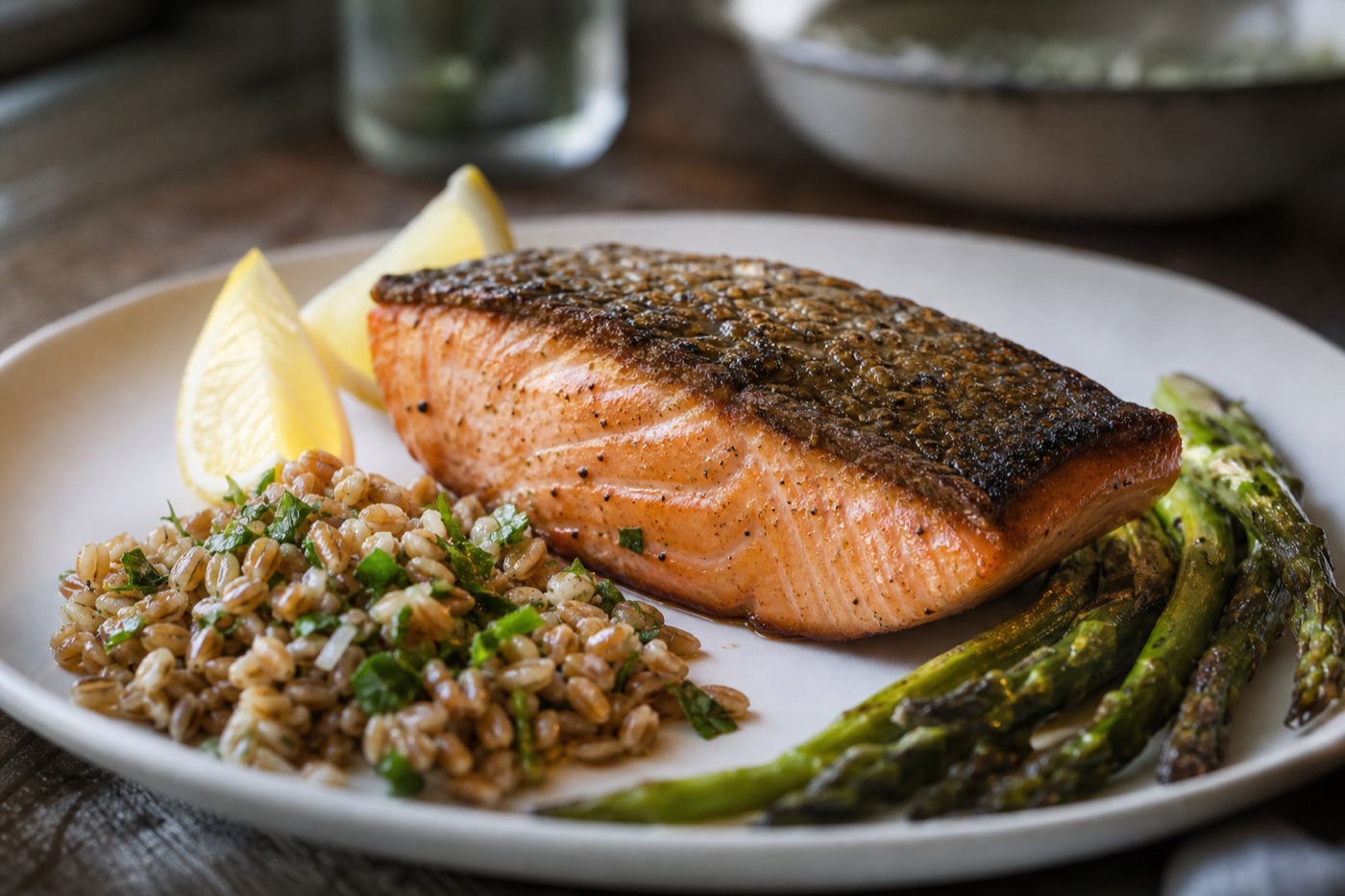
Salmon is about as close to a consensus food as nutrition gets. It is rich in protein and omega-3 fats, one of the few natural sources of vitamin D, and low in mercury. The main decisions are which kind to buy and how to cook it so it does not end up dry.
What’s in it
Three ounces (85 g) of cooked farmed Atlantic salmon has about 175 calories, roughly 19 grams of protein and around 10 grams of fat, based on typical USDA FoodData Central values. The NIH Office of Dietary Supplements lists about 1.5 to 1.8 grams of the omega-3 fats EPA and DHA in a 3-ounce cooked portion of Atlantic salmon.
Wild salmon varies by species. Sockeye is typically leaner, with fewer calories and slightly more protein per ounce. It is also notable for vitamin D: a 3-ounce cooked portion supplies about 14 micrograms (570 IU), a large share of the 20-microgram daily value.
Salmon also delivers plenty of vitamin B12, selenium, niacin, vitamin B6 and potassium.
The good
Omega-3s you can actually get from food. EPA and DHA are long-chain omega-3 fats concentrated in fatty fish. They are important for heart, brain and eye health, and most people get very little of them from other foods.
Heart-health backing. The American Heart Association recommends eating fish, particularly fatty fish such as salmon, about twice a week. The Dietary Guidelines for Americans suggest about 8 ounces of seafood a week for most adults.
High-quality protein. Salmon is a complete protein with a moderate calorie count, which makes it an easy anchor for a balanced dinner. It earns a regular spot in our guide on how to eat more protein.
Vitamin D. Very few foods naturally contain meaningful vitamin D. Salmon, especially wild sockeye, is one of the best.
Low mercury. The FDA and EPA place salmon in their “best choices” category, including for people who are pregnant or breastfeeding and for children.
The catch
Price. Fresh wild salmon can be expensive. Frozen fillets and canned salmon offer the same core nutrition for less.
Sodium in smoked and cured salmon. Smoked salmon and lox are delicious and often quite salty. Treat them as an occasional topping rather than a daily habit if you watch sodium.
Cooking method. Deep-fried or heavily glazed salmon adds fat, sugar and calories. A sticky glaze made mostly of sugar can turn a light fillet into a sweet dish.
Overcooking. Not a health issue, but dry, chalky salmon is a big reason people stop buying it.
How to eat it well
- Roast it simply. Place fillets on a sheet pan, brush with a little olive oil, season with salt, pepper and lemon, and roast at about 400°F until the center flakes, usually 10 to 15 minutes depending on thickness. Our verdict on olive oil explains why it is a good match.
- Check doneness. The FDA recommends cooking fish to an internal temperature of 145°F, or until the flesh is opaque and separates easily with a fork.
- Use frozen. Thaw overnight in the fridge, or cook straight from frozen with a few extra minutes.
- Keep canned on hand. Mix canned salmon with yogurt, lemon and herbs for sandwiches, or form it into patties.
- Build a bowl. Salmon over rice with vegetables is a classic; see our take on white rice. For quick weeknight assembly ideas, see how to eat healthy when busy.
- Season boldly, glaze lightly. Miso, mustard, herbs, garlic and citrus add flavor without much sugar.
Who should go easy
People with fish allergies must avoid salmon. Pregnant people should follow FDA and EPA advice on seafood and avoid raw salmon and refrigerated smoked salmon unless it is cooked into a dish, as the CDC recommends, because of the risk of Listeria. Those taking blood-thinning medication or considering fish oil supplements should talk to their doctor. People with kidney disease may need to manage protein, phosphorus or potassium and can get guidance from a registered dietitian.
The verdict
Salmon is one of the most nutritious foods in the case. Wild or farmed, fresh, frozen or canned, it delivers protein, omega-3s and vitamin D with little mercury. Cook it simply, keep glazes light and aim for seafood about twice a week.
Your questions, answered
- How often should I eat salmon?
- The Dietary Guidelines suggest about 8 ounces of seafood a week for most adults, and the American Heart Association recommends fish, particularly fatty fish, about twice a week. Salmon two times a week fits both, though rotating with other fish adds variety.
- Is wild salmon healthier than farmed salmon?
- Both are nutritious. Farmed Atlantic salmon tends to be higher in fat, including omega-3s, while wild salmon is usually leaner with a slightly different nutrient mix. U.S. health agencies consider both good choices; pick what fits your budget and taste.
- Is salmon safe during pregnancy?
- The FDA and EPA list salmon among the best seafood choices for people who are pregnant or breastfeeding because it is low in mercury. Cook it thoroughly, and avoid refrigerated smoked salmon unless it is cooked into a dish, as the CDC advises.
- Is canned salmon healthy?
- Yes. Canned salmon is an affordable, shelf-stable option with similar protein and omega-3s. Versions with soft, edible bones add calcium. Check the sodium, which varies by product.
Sources
- NIH Office of Dietary Supplements
- U.S. Food and Drug Administration
- American Heart Association
- Dietary Guidelines for Americans
General information, not medical advice. If a food decision depends on your health, talk to a doctor or registered dietitian.
Clara runs The Healthy Eaters and edits every verdict before it goes out. She likes food writing that answers the question in the first paragraph.
More from Clara
More from The Healthy Eaters
- Are Almonds Healthy? A Handful With Surprising Range
Almonds bring vitamin E, magnesium, fiber and good fats in a pocket-sized package. The only real trick is knowing when a handful becomes a bagful. - Are Bananas Healthy? The Case for Fruit's Most Portable Snack
Bananas get side-eye for their sugar and carbs. Here is what one actually contains, why ripeness changes the picture, and who should keep count. - Are Eggs Healthy? The Cholesterol Question, Cracked Open
Eggs have been nutrition's favorite villain and its favorite hero, sometimes in the same decade. Here is where the evidence sits now, and what goes on the plate beside them. - Are Potatoes Healthy? Rescuing the Spud From Its Reputation
The humble potato is richer in potassium and vitamin C than most people assume. How it gets to your plate matters far more than the potato itself.