How to Eat More Protein Without Living on Chicken Breast
Most people do not need shakes. They need a protein food at each meal and a few smart swaps, plus a clear sense of how much is enough.
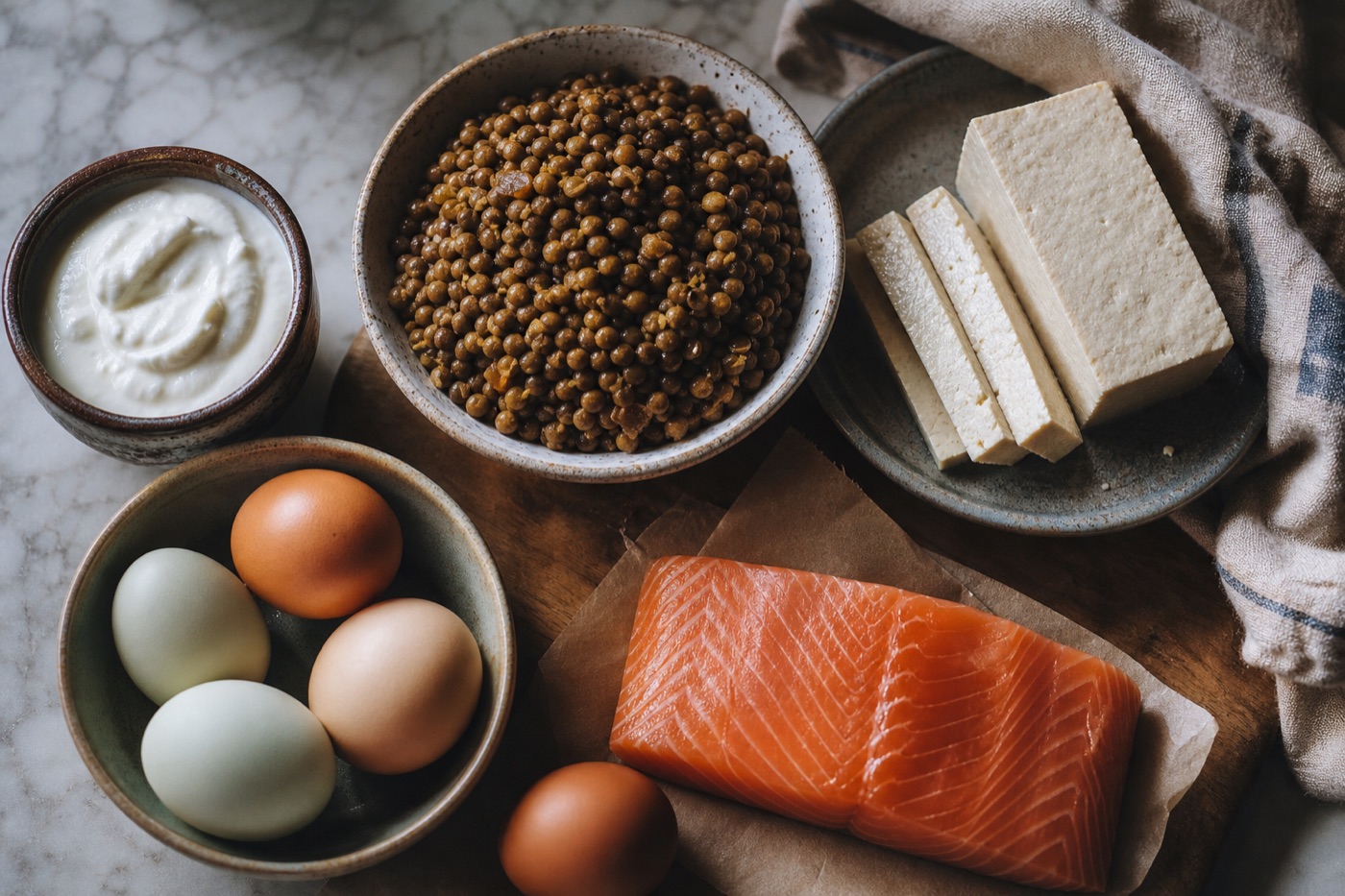
The short answer: put a protein food on the plate at every meal and most snacks. For most adults, that alone gets you to the recommended amount without powders or meal plans. The rest is choosing protein foods that also bring fiber, healthy fats or other nutrients along for the ride.
1. Know your number
The Recommended Dietary Allowance (RDA) for healthy adults is 0.8 grams of protein per kilogram of body weight per day. To estimate yours, divide your weight in pounds by 2.2, then multiply by 0.8.
- 130 lb (59 kg): about 47 g
- 150 lb (68 kg): about 55 g
- 180 lb (82 kg): about 65 g
The RDA is a minimum to meet basic needs, not a ceiling. Older adults, people who do a lot of strength training and those recovering from illness or surgery may benefit from more, and a registered dietitian can help you set a target.
2. Learn the protein all-stars
Typical values, rounded, from USDA FoodData Central:
| Food | Portion | Protein |
|---|---|---|
| Chicken breast, cooked | 3 oz | about 26 g |
| Salmon, cooked | 3 oz | about 19 to 22 g |
| Canned tuna, drained | 3 oz | about 17 to 20 g |
| Lentils, cooked | 1 cup | about 18 g |
| Plain nonfat Greek yogurt | 6 oz | about 17 g |
| Low-fat cottage cheese | 1/2 cup | about 12 to 14 g |
| Firm tofu | 3 oz | about 8 to 12 g |
| Milk or soy milk | 1 cup | about 7 to 8 g |
| Black beans, cooked | 1/2 cup | about 7 to 8 g |
| Peanut butter | 2 tbsp | about 7 g |
| Egg | 1 large | about 6 g |
| Almonds | 1 oz | about 6 g |
3. Fix breakfast first
Breakfast is where many people fall short, especially if it is toast, cereal or a pastry. Easy upgrades:
- Plain Greek yogurt with fruit and nuts instead of a flavored cup (see is Greek yogurt healthy)
- Two eggs with whole-grain toast and spinach (see are eggs healthy)
- Oatmeal cooked in milk or soy milk, topped with nut butter
- Cottage cheese with sliced peaches or tomatoes and pepper
4. Upgrade your snacks
Swap a protein-free snack for one with some staying power: a hard-boiled egg, a handful of almonds, a cheese stick with fruit, edamame, hummus with vegetables, or roasted chickpeas.
5. Make plants pull their weight
Beans and lentils deliver protein and fiber together, a combination few animal foods match. Add a can of rinsed beans to soups, salads, pasta sauce or tacos. Firm tofu, tempeh and edamame are complete proteins; our verdict on tofu covers how to cook it well.
6. Choose leaner animal proteins most days
Fish, poultry, eggs, low-fat dairy and lean cuts of meat give you plenty of protein without much saturated fat. Fatty fish such as salmon also brings omega-3s. Processed meats such as bacon and deli meats tend to be high in sodium, so treat them as occasional.
7. Spread it across the day
Many people eat little protein at breakfast and most of it at dinner. Spreading it out across meals helps each meal feel satisfying and is a practical habit for maintaining muscle.
8. Cook protein in batches
Grill a tray of chicken thighs, bake a block of tofu, boil a half-dozen eggs and cook a pot of lentils on Sunday. With protein ready in the fridge, adding it to meals takes seconds.
9. Track for a few days if you are unsure
If you do not know how much protein you eat now, logging a few typical days can be eye-opening. A simple food log works, or see our pick of calorie tracking apps, most of which show protein too.
An example day (roughly 80 to 90 g)
| Meal | What | Approx. protein |
|---|---|---|
| Breakfast | 6 oz plain Greek yogurt, berries, 1 oz almonds | about 23 g |
| Lunch | Lentil soup made with 1 cup lentils, slice of whole-grain bread | about 21 g |
| Snack | 2 hard-boiled eggs | about 12 g |
| Dinner | 3 oz salmon, 1 cup quinoa, roasted vegetables | about 27 to 30 g |
Who should get personal advice
People with kidney disease often need to limit protein and should follow their care team’s guidance. If you are pregnant, an older adult, recovering from illness or training hard, a doctor or registered dietitian can help you set the right target.
The short version
Most adults need about 0.8 grams of protein per kilogram of body weight. Hit it by putting a protein food at every meal, fixing breakfast first, choosing protein-rich snacks, leaning on beans, lentils, tofu and fish, and cooking protein in batches. No shakes required.
Your questions, answered
- How much protein do I need a day?
- The Recommended Dietary Allowance for healthy adults is 0.8 grams per kilogram of body weight, which is about 55 grams for someone who weighs 150 pounds. Some people, such as older adults, very active people or those recovering from illness, may benefit from more; a doctor or registered dietitian can advise.
- What are the easiest high-protein foods?
- Eggs, plain Greek yogurt, cottage cheese, canned tuna or salmon, chicken, tofu, lentils and beans are all simple and widely available. Many need little or no cooking.
- Can you get enough protein on a plant-based diet?
- Yes. Beans, lentils, tofu, tempeh, edamame, soy milk, nuts, seeds and whole grains can meet protein needs when you eat a variety of them throughout the day. Soy foods are complete proteins on their own.
- Is too much protein bad for you?
- For healthy people, moderately higher protein intakes from food are generally considered safe. People with kidney disease often need to limit protein and should follow their care team's advice. Getting protein from a variety of foods also helps keep saturated fat and sodium in check.
Sources
- NIH Office of Dietary Supplements
- Dietary Guidelines for Americans
- USDA FoodData Central
- Harvard T.H. Chan School of Public Health, The Nutrition Source
General information, not medical advice. If a food decision depends on your health, talk to a doctor or registered dietitian.
Clara runs The Healthy Eaters and edits every verdict before it goes out. She likes food writing that answers the question in the first paragraph.
More from Clara
More from The Healthy Eaters
- How to Build a Healthy Grocery List You Will Actually Use
A good grocery list is the most underrated health tool in your kitchen. Here is how to write one in 15 minutes, with a template you can copy. - How to Count Calories Accurately, Without Making It Your Whole Personality
Calorie counting is a useful tool for learning portions and reaching a goal. Done carelessly, it is guesswork with extra steps. Here is how to do it well. - How to Cut Back on Sugar Without Declaring War on Dessert
Most added sugar does not come from the cake you see coming. It comes from drinks, breakfast and snacks. Start there, taper slowly and keep the treats you love. - How to Eat Healthy at Restaurants Without Ordering a Sad Salad
Restaurant meals tend to be bigger, saltier and richer than what you cook at home. A few ordering habits handle most of that, and you still get dinner out.