How to Eat Healthy at Restaurants Without Ordering a Sad Salad
Restaurant meals tend to be bigger, saltier and richer than what you cook at home. A few ordering habits handle most of that, and you still get dinner out.
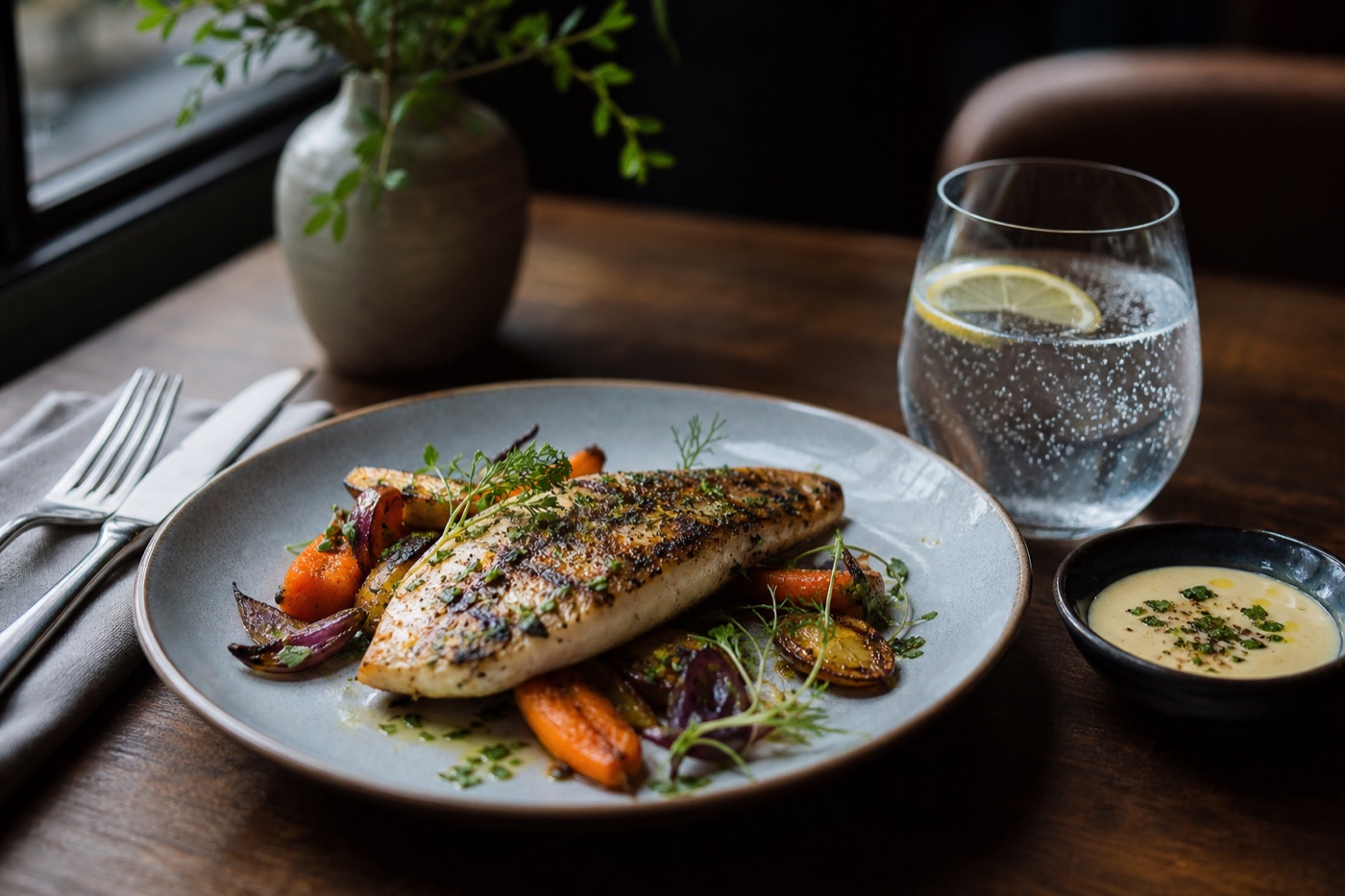
The short answer: you can eat well at almost any restaurant if you plan a little and ask for what you want. Favor grilled, roasted or steamed dishes, get sauces on the side, swap fried sides for vegetables, drink water and deal with the portion size before you start. Then relax and enjoy the meal.
Why restaurant food is tricky
Restaurant cooking is designed to taste great, and the easiest levers for that are butter, oil, salt and sugar. Portions are often large enough for two. The CDC notes that most of the sodium Americans eat comes from packaged and restaurant foods, not the salt shaker. None of this means eating out is bad; it just means the defaults lean rich.
1. Look before you go
Most restaurants post menus online. Choosing your meal in advance, when you are not hungry and surrounded by tempting smells, makes a calmer decision more likely. Under FDA rules, chain restaurants with 20 or more locations must display calories on menus and provide more nutrition information on request.
2. Read the menu for cooking methods
Certain words signal lighter cooking: grilled, roasted, broiled, baked, steamed, poached, seared. Others signal extra fat: fried, crispy, battered, breaded, creamy, smothered, loaded. You do not have to avoid the second group forever, but it helps to know what you are choosing.
3. Build a balanced plate from the menu
Use the same plate model you would at home: protein, vegetables and a modest starch. A grilled fish or chicken dish with vegetables and rice, a stir-fry heavy on vegetables, or a bean-based dish all fit. If the main comes with fries, ask whether you can swap for a side salad, steamed vegetables or a baked potato.
4. Take control of sauces and dressings
Sauces, gravies, dressings and butter finishes can add hundreds of calories. Ask for them on the side and dip your fork rather than pouring. Choose vinaigrettes, salsa, mustard or lemon over creamy or cheese-based options.
5. Handle the portion up front
Restaurant pasta plates, burritos and rice dishes are often two or three servings. Options:
- Ask for a to-go box when the food arrives and set aside half.
- Share a main dish and order an extra side of vegetables.
- Order an appetizer-size portion or a half order as your meal.
6. Watch the extras
The bread basket, chips and salsa, and fried starters can rival a main in calories before dinner even begins. Decide in advance whether you want them, have a portion and then ask the server to take the basket away if it is too tempting.
7. Drink smart
Soda, sweet tea, lemonade and cocktails can add a lot of sugar and calories. Water, sparkling water with lemon, unsweetened iced tea or coffee are easy swaps. If you drink alcohol, keep it modest; drinking less is better for health than drinking more, and a glass of water between drinks helps. Our guide on how to cut back on sugar covers drinks in detail.
8. Share dessert, or not
If dessert is part of the fun, order one for the table and enjoy a few bites. If you are full, a coffee or tea can close out the meal just as well.
A cuisine cheat sheet
| Cuisine | Lighter picks | Go easy on |
|---|---|---|
| Mexican | Fajitas, grilled fish tacos, black beans, salsa | Fried shells, queso, extra sour cream |
| Italian | Grilled fish, minestrone, tomato-based pasta, half portions | Cream sauces, fried calamari, giant pasta plates |
| Chinese | Steamed dishes, stir-fried vegetables with tofu or chicken | Battered and fried dishes, sweet sauces |
| Japanese | Sashimi, edamame, miso soup, grilled fish | Tempura, mayonnaise-based rolls |
| Indian | Tandoori dishes, lentil dal, vegetable curries | Cream-heavy curries, fried breads |
| American | Grilled chicken or fish, salads with protein, baked potato | Fries, loaded nachos, oversized burgers |
For more on the starches that dominate many menus, see our verdicts on white rice and pasta.
9. Add vegetables wherever possible
Order a side salad or vegetable side, add vegetables to an omelet or pizza, or ask for extra vegetables in a stir-fry. More plants on the plate means more fiber and volume. Our guide on how to eat more vegetables has more ideas.
10. Keep it in perspective
If you eat out once in a while, enjoy it and order what you want. If restaurants are part of your weekly routine, these habits matter more. Either way, one meal never makes or breaks your health. People with diabetes, kidney disease, allergies or other conditions should ask a doctor or registered dietitian for advice tailored to them, and should always tell servers about food allergies.
The short version
Preview the menu, choose grilled, roasted or steamed dishes, ask for sauces on the side, swap fries for vegetables, and drink water. Deal with portions early by sharing or boxing half, decide on bread and dessert on purpose, and enjoy the meal without guilt.
Your questions, answered
- What is the healthiest thing to order at a restaurant?
- Look for a lean protein that is grilled, roasted, baked or steamed, paired with vegetables and a modest portion of whole grains or potatoes. Ask for sauce on the side. Broth-based soups and salads with protein are also reliable choices.
- How can I avoid overeating at restaurants?
- Decide before you arrive what you might order, skip or share the bread basket and appetizers, drink water, and ask for a to-go box at the start so you can set aside half. Eating slowly gives fullness signals time to catch up.
- Are restaurant salads healthy?
- Many are, but some carry more calories than a burger once you add fried toppings, cheese, candied nuts and creamy dressing. Choose salads with grilled protein and plenty of vegetables, and ask for dressing on the side.
- How do I find nutrition information for restaurant food?
- Chain restaurants with 20 or more locations must post calories on their menus and provide additional nutrition information on request, under FDA rules. Many also publish full nutrition details online.
Sources
- U.S. Food and Drug Administration
- Centers for Disease Control and Prevention
- Dietary Guidelines for Americans
General information, not medical advice. If a food decision depends on your health, talk to a doctor or registered dietitian.
Jonah writes the Is It Healthy? series and the app guides, and has a soft spot for anything that comes in a jar.
More from Jonah
More from The Healthy Eaters
- How to Build a Healthy Grocery List You Will Actually Use
A good grocery list is the most underrated health tool in your kitchen. Here is how to write one in 15 minutes, with a template you can copy. - How to Count Calories Accurately, Without Making It Your Whole Personality
Calorie counting is a useful tool for learning portions and reaching a goal. Done carelessly, it is guesswork with extra steps. Here is how to do it well. - How to Cut Back on Sugar Without Declaring War on Dessert
Most added sugar does not come from the cake you see coming. It comes from drinks, breakfast and snacks. Start there, taper slowly and keep the treats you love. - How to Eat Healthy on a Budget: Cheap Food That Actually Feeds You
Healthy eating does not require a specialty grocer or a superfood budget. It requires a plan, a few humble staples and a freezer you are not afraid to use.