Are Almonds Healthy? A Handful With Surprising Range
Almonds bring vitamin E, magnesium, fiber and good fats in a pocket-sized package. The only real trick is knowing when a handful becomes a bagful.
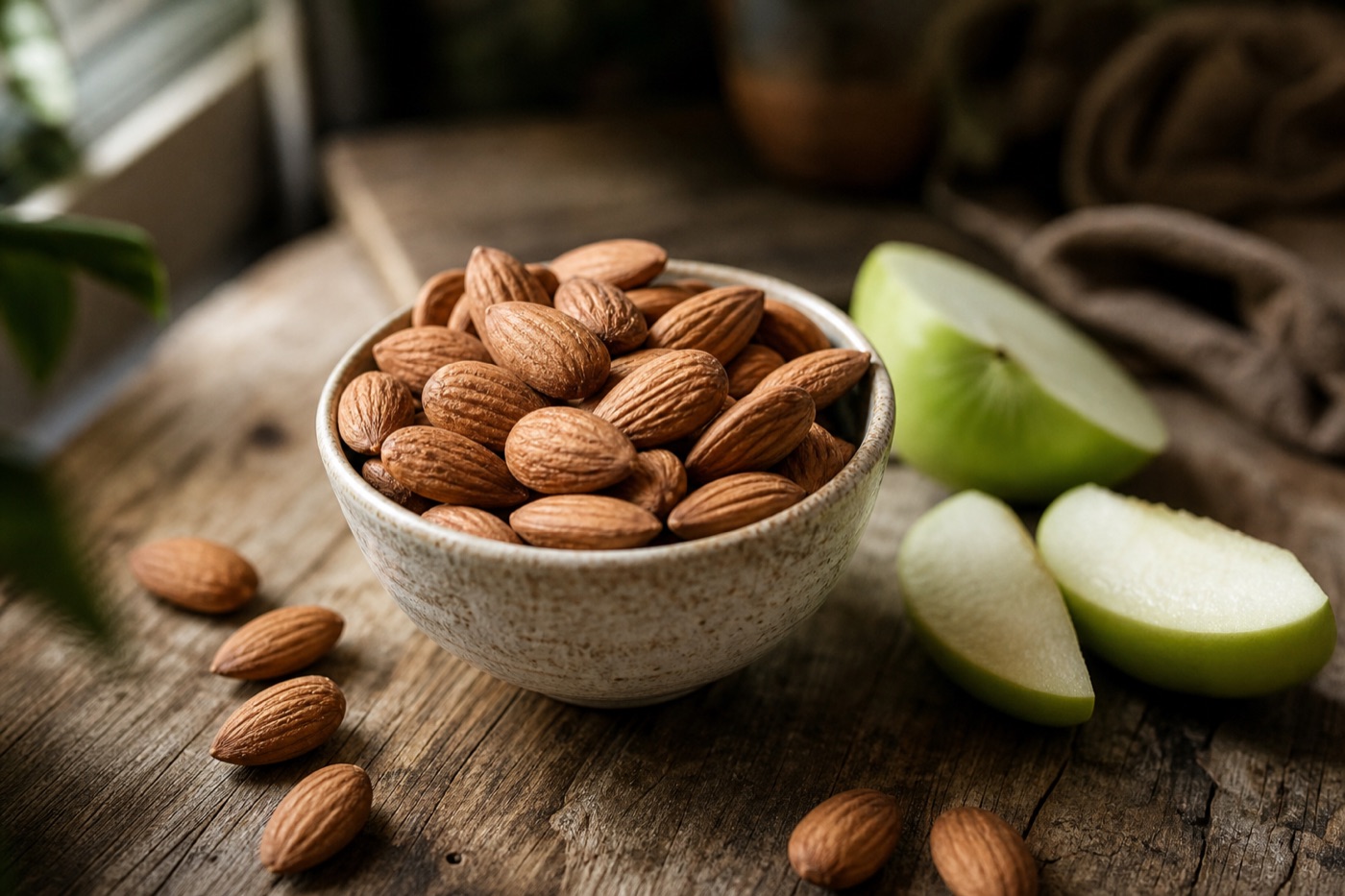
Almonds are healthy, and they are one of the easiest upgrades you can make to a snack drawer. A handful supplies protein, fiber, vitamin E, magnesium and heart-friendly fats. The catch is the same as with every nut: they are dense, and it is very easy to keep reaching into the bag.
What’s in it
One ounce of almonds (28 g, about 23 nuts) contains roughly 165 calories, about 6 grams of protein, about 14 grams of fat and around 3.5 grams of fiber, according to typical USDA FoodData Central values. Most of the fat is monounsaturated, with only about a gram of saturated fat.
That ounce also carries about 7 milligrams of vitamin E, roughly half the daily value, around 75 to 80 milligrams of magnesium and about 75 milligrams of calcium, plus riboflavin, manganese and copper. Almonds have very little sugar and, unless salted, almost no sodium.
The good
Heart-friendly fats. The American Heart Association encourages unsaturated fats in place of saturated ones, and almonds deliver mostly the former. The FDA allows a qualified health claim stating that eating 1.5 ounces of most nuts daily, as part of a diet low in saturated fat and cholesterol, may reduce the risk of heart disease.
Vitamin E. Almonds are one of the richest food sources of vitamin E, an antioxidant that helps protect cells. The NIH Office of Dietary Supplements lists nuts, seeds and vegetable oils as the main sources, with almonds near the top.
Magnesium. Many adults do not get enough magnesium, which supports muscle and nerve function, blood sugar control and bone health. An ounce of almonds provides a solid chunk of the daily need.
Snack staying power. Protein, fat and fiber digest slowly. A handful of almonds tends to hold you longer than a snack of the same calories made mostly of refined carbohydrate.
Portable and shelf-stable. Almonds travel well, need no refrigeration for weeks and pair with almost anything.
The catch
Calorie density. At about 165 calories per ounce, almonds add up quickly. Mindlessly eating from a large bag can mean several ounces before you notice.
Flavored versions. Honey-roasted, candied, chocolate-covered and heavily seasoned almonds add sugar, sodium or extra oil. A bowl of chocolate almonds belongs in dessert territory, as we note in is dark chocolate healthy.
Almond products are not almonds. Almond milk is mostly water and contains a fraction of the nutrition of whole nuts unless fortified. If you are choosing a plant milk, our look at oat milk compares options. Almond flour is nutritious but calorie-dense in baking.
Allergy. Tree nuts are one of the major food allergens, and reactions can be serious.
How to eat it well
- Portion before you snack. Count out about 23 almonds, or fill a small container, rather than eating from the bag.
- Pair with fruit. Almonds with an apple, pear, orange or a handful of grapes make a balanced snack with fiber, fat and protein.
- Sprinkle, do not shovel. A tablespoon of sliced or chopped almonds on yogurt, oatmeal, salads or vegetables adds crunch for roughly 30 to 35 calories. Homemade granola is a good vehicle too.
- Choose plain or lightly salted. Dry-roasted or raw almonds are the best everyday options.
- Try almond butter. It offers similar nutrition to whole almonds and spreads like peanut butter. Choose one with just almonds, and maybe salt.
- Store them cool. Keep almonds in an airtight container in a cool spot, or in the fridge or freezer for longer storage, to keep their oils from going stale.
Who should go easy
People with tree nut allergies must avoid almonds and products made with them. Young children should not be given whole nuts because they are a choking hazard; ask your pediatrician about safe forms such as thinly spread nut butter. Those prone to calcium oxalate kidney stones may be advised to limit high-oxalate foods, which include almonds, so ask your doctor. People with kidney disease who must limit phosphorus or potassium should check with a registered dietitian.
The verdict
Almonds are a genuinely nutritious, satisfying snack. Stick to about an ounce, choose plain or lightly salted, and use them in place of lower-quality snacks rather than on top of them. A handful a day is a small habit with a lot going for it.
Your questions, answered
- How many almonds should I eat a day?
- About an ounce, or roughly 23 almonds, is a common serving. The FDA allows a qualified health claim that eating 1.5 ounces of most nuts a day, as part of a diet low in saturated fat and cholesterol, may reduce the risk of heart disease. Adjust to your calorie needs.
- Are almonds good for weight loss?
- They can be. Their protein, fat and fiber make them filling, and swapping a handful of almonds for chips or cookies is a step up in nutrition. Because they are calorie-dense, portioning them out matters more than with most snacks.
- Are raw or roasted almonds healthier?
- The differences are small. Dry-roasted almonds have nearly the same nutrition as raw ones. Oil-roasted, heavily salted, honey-glazed or candy-coated almonds add calories, sodium or sugar, so plain versions are the better daily choice.
- Is almond milk as healthy as almonds?
- No. Almond milk is mostly water with a small amount of almonds, so it has far less protein, fiber and vitamin E than the nuts themselves unless it is fortified. It is a low-calorie milk alternative, not a substitute for eating almonds.
Sources
- USDA FoodData Central
- U.S. Food and Drug Administration
- NIH Office of Dietary Supplements
- American Heart Association
General information, not medical advice. If a food decision depends on your health, talk to a doctor or registered dietitian.
Nell writes the How-To guides: budgets, grocery lists, eating out and fitting good food into a busy week.
More from Nell
More from The Healthy Eaters
- Are Bananas Healthy? The Case for Fruit's Most Portable Snack
Bananas get side-eye for their sugar and carbs. Here is what one actually contains, why ripeness changes the picture, and who should keep count. - Are Eggs Healthy? The Cholesterol Question, Cracked Open
Eggs have been nutrition's favorite villain and its favorite hero, sometimes in the same decade. Here is where the evidence sits now, and what goes on the plate beside them. - Are Potatoes Healthy? Rescuing the Spud From Its Reputation
The humble potato is richer in potassium and vitamin C than most people assume. How it gets to your plate matters far more than the potato itself. - Is Avocado Healthy? Yes, and Here Is How Much Counts as a Serving
Avocado is the rare trendy food that lives up to the hype. It is also rich enough that a whole one on toast is a bigger deal than it looks.