Is Popcorn Healthy? The Whole-Grain Snack Hiding in Plain Sight
Plain popcorn is a whole grain with real fiber and very few calories per bowl. What happens to it at the movies, or in a flavored bag, is another matter.
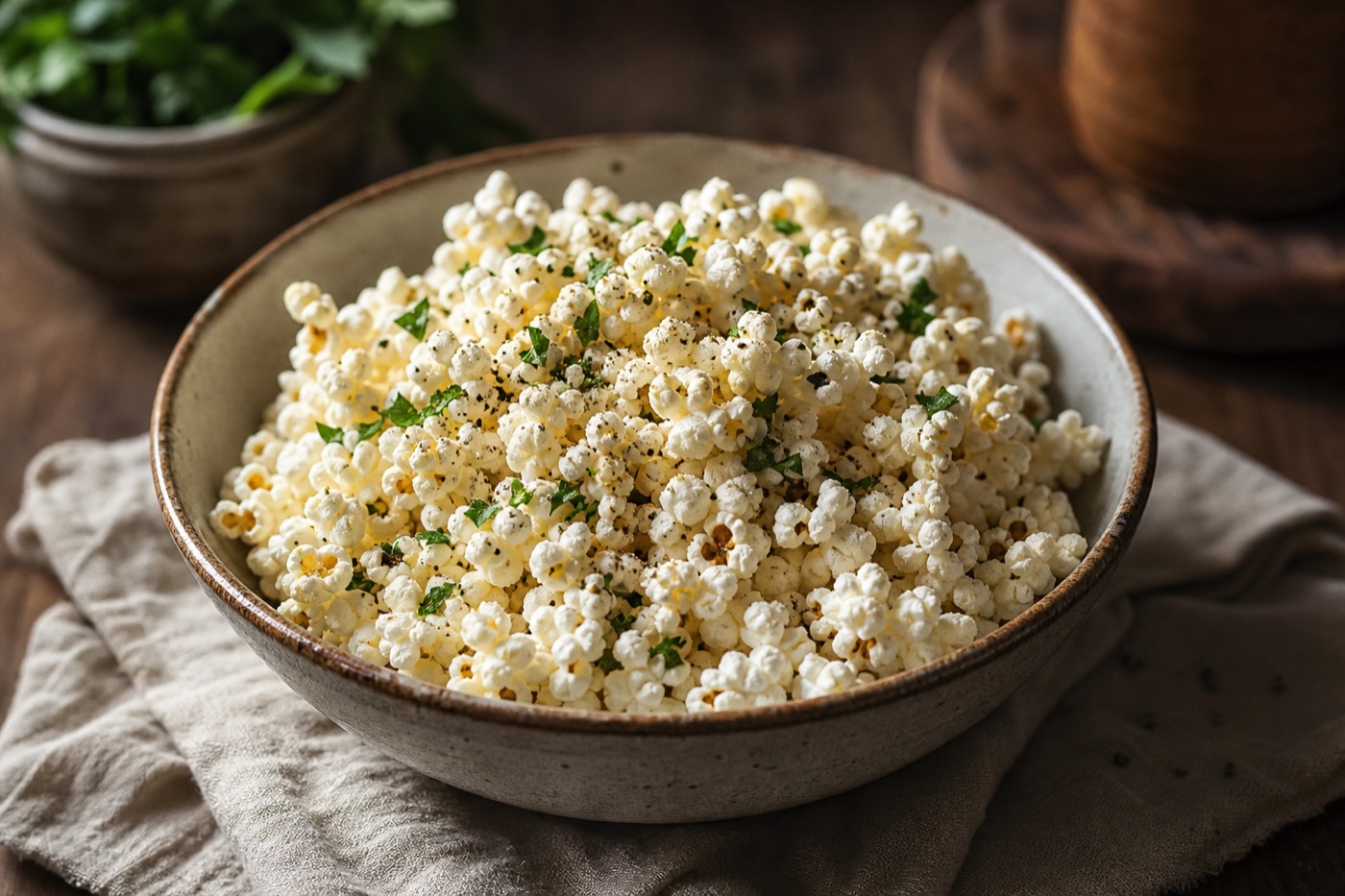
Plain popcorn is a genuinely healthy snack and one of the better bargains in the pantry. It is a whole grain, it delivers fiber and it fills a big bowl for very few calories. The trouble is that popcorn is rarely eaten plain; butter, oil, salt and sweet coatings do most of the damage.
What’s in it
Three cups of air-popped popcorn (about 24 g) have around 90 to 95 calories, about 3.5 grams of fiber, roughly 3 grams of protein and about 1 gram of fat, based on typical USDA FoodData Central values. There is virtually no sodium until you add salt.
Popping in oil changes the math. Three cups cooked in oil typically run roughly 150 to 190 calories, depending on how much oil is used and how much the kernels absorb.
Popcorn also contains small amounts of magnesium, phosphorus and zinc, along with polyphenols concentrated in the hull, the part that gets stuck in your teeth.
The good
It is a whole grain. Each popped kernel is the entire grain, including the bran and germ. MyPlate counts 3 cups of popped popcorn as a 1-ounce equivalent of grains, which helps toward the Dietary Guidelines advice to make at least half of your grains whole.
Volume for the calories. Popcorn is mostly air. A big bowl takes time to eat, satisfies the urge to crunch, and keeps you busy for a whole movie without a big calorie bill.
Fiber. At 3.5 grams per 3 cups, plain popcorn offers more fiber than many packaged snacks, which helps with fullness and digestion.
Cheap and easy. A bag of plain kernels costs little and makes many bowls. It is a natural fit for eating healthy on a budget.
The catch
The toppings. Melted butter, butter-flavored oils, cheese powders and caramel coatings can multiply the calories and add a lot of saturated fat, sodium or sugar. A large movie-theater tub with topping can carry more calories than a full meal.
Sodium. Salt sticks easily to popcorn, and flavored versions can deliver a big share of the daily limit. Adults are advised to keep sodium under 2,300 milligrams a day.
Microwave bags vary. Plain or lightly salted versions are reasonable; butter-flavored, kettle and “extra” varieties often are not. The Nutrition Facts label tells you which you have.
It is easy to eat absent-mindedly. Grazing from a bag in front of a screen makes it hard to notice how much is gone. Pouring a set portion into a bowl helps.
How to eat it well
- Pop it yourself. Use an air popper, a covered pot with a teaspoon or two of oil, or plain kernels in a folded paper bag in the microwave.
- Use oil with purpose. If you add fat, a light drizzle of olive oil goes further than you think. We explain the upside in is olive oil healthy.
- Season boldly, not heavily. Try smoked paprika, chili powder, garlic powder, cinnamon, nutritional yeast, black pepper or dried herbs. A fine grating of parmesan gives cheesy flavor in a small amount; see is cheese healthy for why sharp cheese works best.
- Mist, then sprinkle. A quick spray or light toss with oil helps seasoning stick so you need less salt.
- Portion into a bowl. Three to four cups is a satisfying snack. Leave the rest in the kitchen.
- Build a better mix. Toss popcorn with a few nuts, or a couple of broken squares of dark chocolate for a sweet-salty treat that is still mostly whole grain.
Who should go easy
Popcorn is a choking hazard for young children, and the CDC lists it among foods to avoid for small kids; ask your pediatrician when it is appropriate. People with dental work, braces or sensitive gums may find hulls troublesome. Anyone with a digestive condition who has been advised to limit certain fibers should ask their doctor or a registered dietitian. People watching sodium for blood pressure or kidney health should keep salt light and skip heavily flavored versions.
The verdict
Plain popcorn is a whole-grain, high-fiber, low-calorie snack worth keeping on hand. Pop it yourself, season it with spices instead of butter and salt, and eat it from a bowl rather than the bag. Kept simple, it is one of the best things you can crunch.
Your questions, answered
- Is popcorn good for weight loss?
- Plain popcorn is one of the most filling snacks per calorie, because it is airy, crunchy and contains fiber. Three cups air-popped have about 90 to 95 calories. Keeping toppings light is what keeps it in that range.
- Is microwave popcorn healthy?
- It varies. Plain or lightly salted microwave popcorn can be a reasonable choice, but butter-flavored and kettle versions often add a lot of fat, sodium or sugar. Check the label, or pop plain kernels yourself in a covered bowl or paper bag.
- Is popcorn a whole grain?
- Yes. Popcorn is the entire corn kernel, so it counts as a whole grain. MyPlate counts 3 cups of popped popcorn as a 1-ounce equivalent of grains.
- Is popcorn safe for young children?
- Popcorn is a choking hazard for young children. The CDC lists it among foods to avoid giving to small children, and many pediatric experts suggest waiting until at least age 4. Ask your pediatrician if you are unsure.
Sources
- USDA FoodData Central
- MyPlate (USDA)
- Dietary Guidelines for Americans
- Centers for Disease Control and Prevention
General information, not medical advice. If a food decision depends on your health, talk to a doctor or registered dietitian.
Jonah writes the Is It Healthy? series and the app guides, and has a soft spot for anything that comes in a jar.
More from Jonah
More from The Healthy Eaters
- Are Almonds Healthy? A Handful With Surprising Range
Almonds bring vitamin E, magnesium, fiber and good fats in a pocket-sized package. The only real trick is knowing when a handful becomes a bagful. - Are Bananas Healthy? The Case for Fruit's Most Portable Snack
Bananas get side-eye for their sugar and carbs. Here is what one actually contains, why ripeness changes the picture, and who should keep count. - Are Eggs Healthy? The Cholesterol Question, Cracked Open
Eggs have been nutrition's favorite villain and its favorite hero, sometimes in the same decade. Here is where the evidence sits now, and what goes on the plate beside them. - Are Potatoes Healthy? Rescuing the Spud From Its Reputation
The humble potato is richer in potassium and vitamin C than most people assume. How it gets to your plate matters far more than the potato itself.