Is Cheese Healthy? The Good, the Salty and the Very Tasty
Cheese delivers protein and calcium with a side of saturated fat and sodium. Which kind you buy, and how much you grate, decides which side wins.
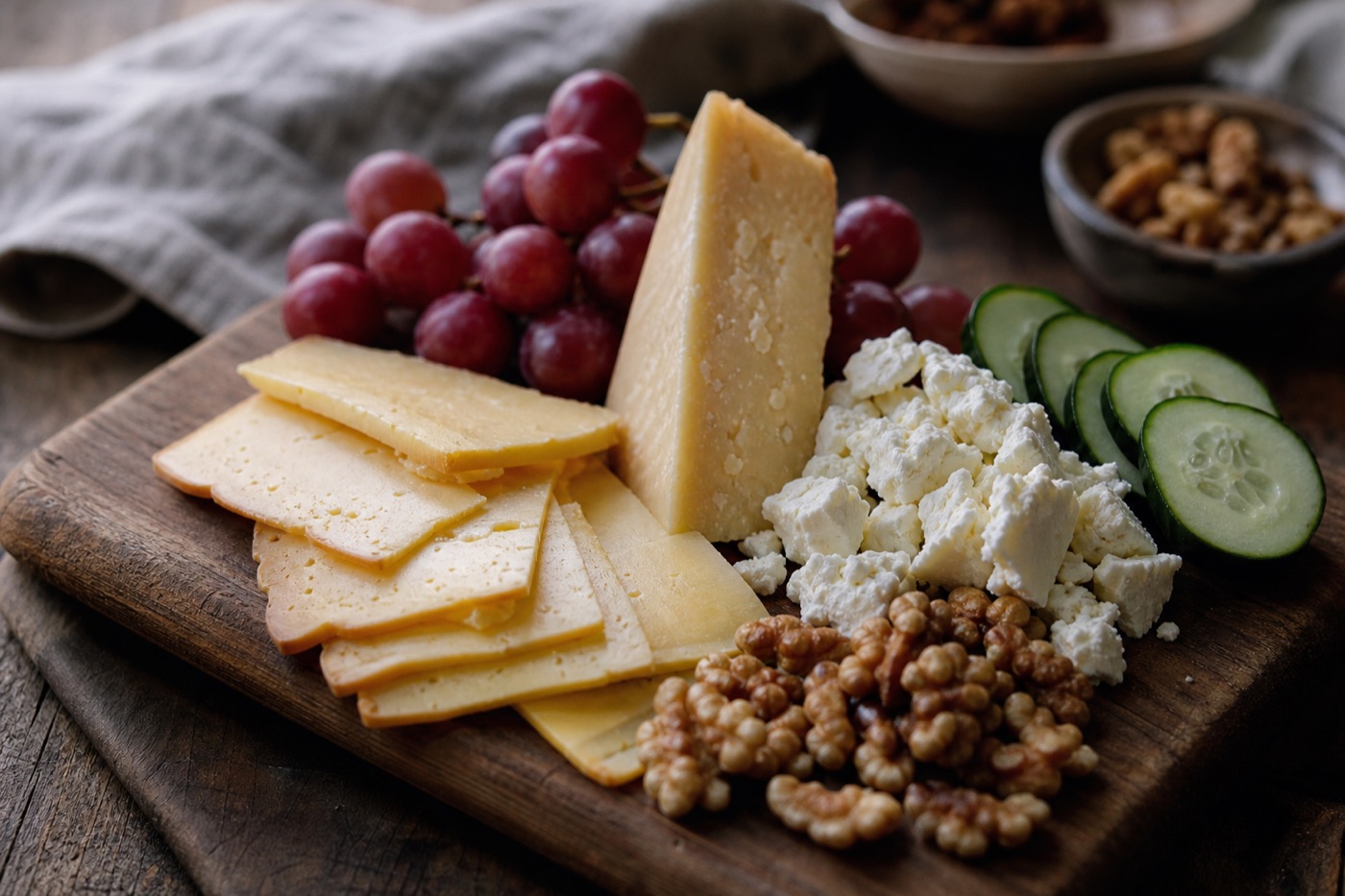
Cheese is healthy in the way a strong spice is healthy: wonderful in the right dose, overwhelming in excess. It brings protein, calcium and real satisfaction to a meal. It also brings saturated fat and sodium, so portion size and variety do most of the work.
What’s in it
An ounce of cheddar (28 g), roughly a slice and a half, has about 115 calories, about 7 grams of protein, about 9 grams of fat and around 200 milligrams of calcium, based on typical USDA FoodData Central values. About 5 to 6 grams of that fat is saturated, and sodium lands around 180 milligrams.
Other cheeses spread out on either side:
| Cheese (typical serving) | Calories | Protein | Note |
|---|---|---|---|
| Part-skim mozzarella, 1 oz | about 70 to 85 | about 7 g | Lower in fat |
| Feta, 1 oz | about 75 | about 4 g | Salty, about 300 mg sodium |
| Parmesan, grated, 1 tbsp | about 20 | about 2 g | Strong flavor, small dose |
| Low-fat cottage cheese, 1/2 cup | about 80 to 90 | about 12 to 14 g | High protein, often high sodium |
Cheese also supplies vitamin A, vitamin B12, phosphorus and zinc.
The good
Protein and calcium in a small package. Few foods offer this much of both per bite. For people who do not drink milk, cheese can be an important calcium source, and MyPlate counts 1.5 ounces of natural cheese as one cup of dairy.
Satisfaction. A little cheese makes vegetables, beans and whole grains feel like a meal you actually want to eat. A sprinkle of feta on a lentil salad or parmesan on roasted broccoli can do more for your diet than a dozen rules.
Lactose-light options. Aged hard cheeses contain very little lactose, so many people with lactose intolerance can enjoy them comfortably.
Protein-dense choices. Cottage cheese and ricotta are mild, high-protein additions to breakfasts and snacks. Our guide on how to eat more protein uses them often.
The catch
Saturated fat. Most full-fat cheese is rich in saturated fat. The Dietary Guidelines for Americans recommend keeping saturated fat under 10 percent of daily calories, which works out to roughly 22 grams on a 2,000-calorie day. Four ounces of cheddar would use nearly all of it.
Sodium. Salt is essential to cheesemaking, and some varieties, such as feta, halloumi, blue cheese and processed slices, are especially salty. Adults are advised to stay under 2,300 milligrams of sodium a day.
Calorie density. Cheese is easy to over-pour. Shredded cheese on a casserole, a burrito or a plate of nachos can quietly add 300 calories or more. If you love a cheesy pasta, a smaller amount of a sharper cheese gets you more flavor for less.
Processed cheese. Individually wrapped slices and spreads often carry more sodium and additives than natural cheese.
How to eat it well
- Go bold, go small. Aged cheddar, parmesan, blue cheese and goat cheese deliver flavor in teaspoons rather than handfuls.
- Grate it yourself. A fine grater makes an ounce look generous and spreads it across the whole dish.
- Pair it with plants. Cheese with apple, pear, cucumber or whole-grain crackers is a balanced snack; cheese with more cheese is a different story.
- Rotate in lower-fat varieties. Part-skim mozzarella, ricotta and cottage cheese work in many recipes that call for richer cheeses.
- Balance the dairy. Mix cheese with other calcium sources like plain yogurt; our verdict on Greek yogurt explains why it is a strong option. Cheese in an omelet works well too, as we note in are eggs healthy.
Who should go easy
People with high LDL cholesterol, heart disease or high blood pressure should ask a doctor or registered dietitian how much cheese fits their plan, and favor lower-sodium, lower-fat choices. Those with kidney disease may need to limit sodium and phosphorus. Anyone with a milk allergy must avoid cheese. Pregnant people should follow CDC guidance on avoiding soft cheeses made from unpasteurized milk because of the risk of Listeria, and ask their clinician about soft cheeses in general.
The verdict
Cheese earns a spot on a healthy table when it is used like a seasoning rather than a foundation. Pick flavorful or lower-fat varieties, keep portions near an ounce, and let it make vegetables, beans and whole grains more delicious.
Your questions, answered
- What is the healthiest cheese?
- There is no single winner. Part-skim mozzarella, ricotta and cottage cheese are lower in fat and calories; hard aged cheeses like parmesan deliver big flavor in small amounts; feta and halloumi run salty. The best choice is the one you enjoy in a measured portion.
- Is cheese bad for cholesterol?
- Most cheese is high in saturated fat, which can raise LDL cholesterol in many people. The Dietary Guidelines advise keeping saturated fat under 10 percent of daily calories. Moderate portions and lower-fat varieties make that easier, and anyone with high cholesterol should ask a doctor for personal guidance.
- Can people who are lactose intolerant eat cheese?
- Often, yes. Hard aged cheeses such as cheddar, Swiss and parmesan contain very little lactose because most of it is removed or broken down during cheesemaking. Fresh soft cheeses contain more. Tolerance varies, so start small.
- How much cheese is one serving?
- MyPlate counts 1.5 ounces of natural cheese as one cup of dairy. For everyday eating, an ounce, about the size of two stacked dice or a thumb, is a sensible portion for snacks and toppings.
Sources
- USDA FoodData Central
- Dietary Guidelines for Americans
- MyPlate (USDA)
- Centers for Disease Control and Prevention
General information, not medical advice. If a food decision depends on your health, talk to a doctor or registered dietitian.
Jonah writes the Is It Healthy? series and the app guides, and has a soft spot for anything that comes in a jar.
More from Jonah
More from The Healthy Eaters
- Are Almonds Healthy? A Handful With Surprising Range
Almonds bring vitamin E, magnesium, fiber and good fats in a pocket-sized package. The only real trick is knowing when a handful becomes a bagful. - Are Bananas Healthy? The Case for Fruit's Most Portable Snack
Bananas get side-eye for their sugar and carbs. Here is what one actually contains, why ripeness changes the picture, and who should keep count. - Are Eggs Healthy? The Cholesterol Question, Cracked Open
Eggs have been nutrition's favorite villain and its favorite hero, sometimes in the same decade. Here is where the evidence sits now, and what goes on the plate beside them. - Are Potatoes Healthy? Rescuing the Spud From Its Reputation
The humble potato is richer in potassium and vitamin C than most people assume. How it gets to your plate matters far more than the potato itself.