Is Hummus Healthy? The Dip That Earns Its Place at the Table
Chickpeas, tahini, lemon and olive oil add up to one of the better dips in the fridge. What you scoop it with, and how much, decides the rest.
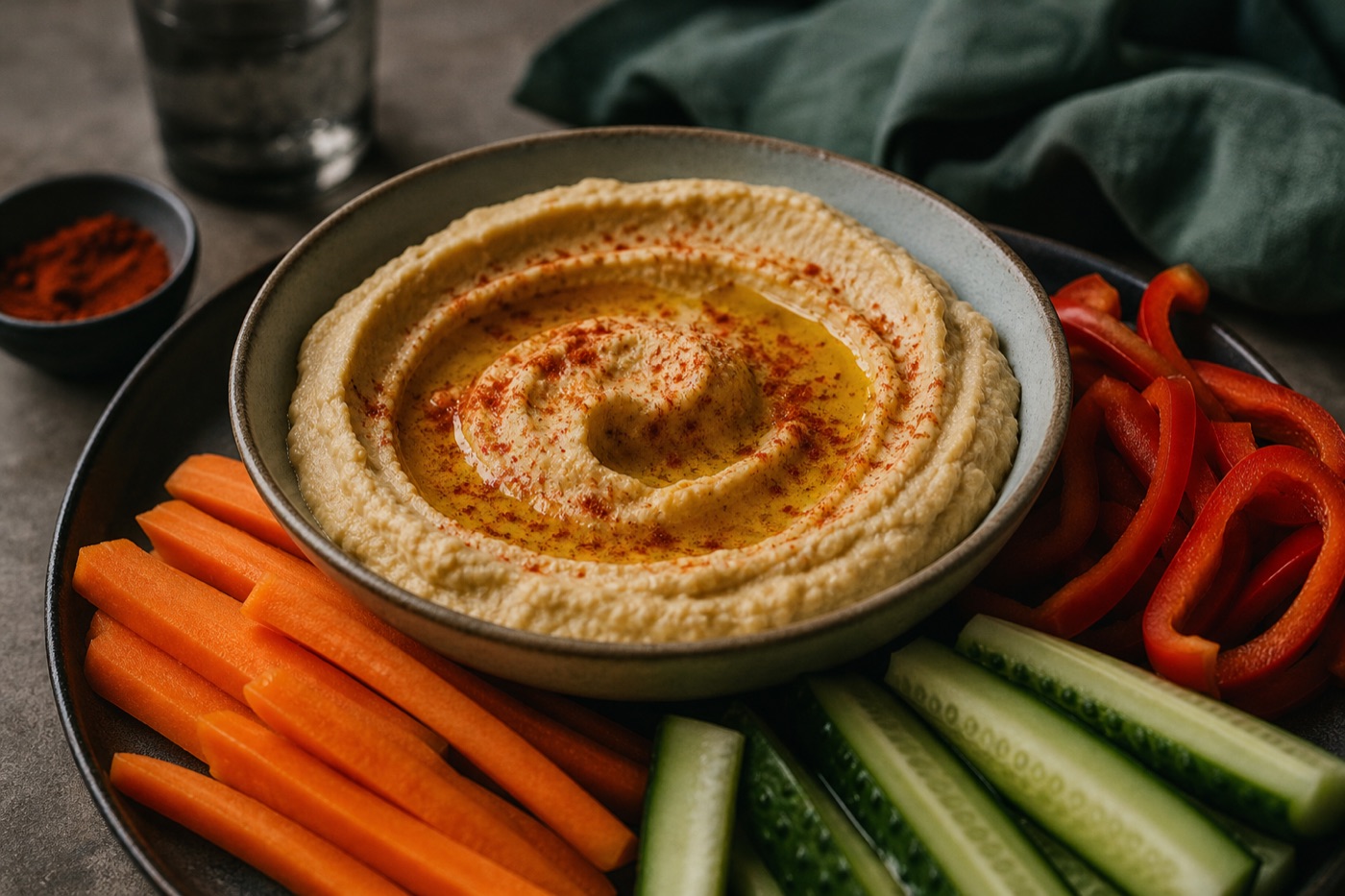
Hummus is healthy, and it is one of the rare dips that improves whatever you dunk into it. Chickpeas bring fiber and plant protein, tahini and olive oil bring mostly unsaturated fat, and lemon and garlic bring the flavor. The only real questions are portion size, sodium and what you are scooping with.
What’s in it
Two tablespoons of hummus (about 30 g) typically contain around 50 to 80 calories, about 2 grams of protein, roughly 1 to 2 grams of fiber and around 3 to 6 grams of fat, with about 100 to 150 milligrams of sodium, based on the range of values in USDA FoodData Central and on product labels. The spread depends mostly on how much tahini and oil a recipe uses.
The foundation is chickpeas. Half a cup of cooked chickpeas has about 135 calories, about 7 grams of protein and about 6 grams of fiber, plus folate, iron, magnesium and potassium. Tahini, a paste of ground sesame seeds, adds calcium, copper and more healthy fat.
The good
Beans in disguise. MyPlate counts beans, peas and lentils as both a vegetable subgroup and a protein food. Most people eat fewer legumes than recommended, and hummus is an easy way to sneak them in.
Fiber and fullness. Chickpea fiber helps keep you full and supports digestion. Paired with crunchy vegetables, hummus makes a snack with real staying power.
Better fats. Tahini and olive oil provide mostly unsaturated fats, the kind heart-health guidance encourages in place of saturated fats. Our verdict on olive oil explains why that matters.
A swap for heavier spreads. On sandwiches and wraps, hummus can replace mayonnaise or butter. As a dip, it outperforms most cream-based options on fiber and saturated fat.
Cheap to make. A can of chickpeas, a spoonful of tahini, lemon, garlic and water become a big bowl, a staple in eating healthy on a budget.
The catch
The tub disappears. Hummus is easy to eat by the half-cup, and a 10-ounce container eaten over an afternoon can approach a full meal’s worth of calories.
The dippers. Pita chips, crackers and tortilla chips often contribute more calories and sodium than the hummus does.
Sodium. Store-bought versions vary, and a few generous scoops can add a noticeable share of the daily limit of 2,300 milligrams for adults.
Dessert hummus. Chocolate, cookie-dough and other sweet versions trade chickpeas’ benefits for added sugar. They are fine as a treat, but they are not the same food.
Sesame allergy. Sesame is one of the major food allergens recognized by the FDA, and traditional hummus contains it.
How to eat it well
- Dip vegetables first. Carrots, cucumbers, bell peppers, snap peas, radishes and cherry tomatoes are ideal. Our guide on how to eat more vegetables treats hummus as a secret weapon.
- Portion it out. Spoon a quarter cup onto a plate instead of eating from the tub.
- Use it as a spread. Swap it for mayonnaise on sandwiches, or spread it on toasted sourdough and top with tomato and a soft egg.
- Make it a meal. Spoon hummus into grain bowls with roasted vegetables and a protein, or thin it with lemon and water into a dressing.
- Make your own. Blend a drained can of chickpeas with 2 tablespoons of tahini, the juice of a lemon, a garlic clove, salt and a few tablespoons of cold water. Add olive oil to taste. You control the salt and fat.
- Rotate the beans. White beans, black beans and edamame make excellent hummus-style dips.
Who should go easy
People with a sesame allergy should avoid traditional hummus and read labels carefully. Those with chickpea or legume allergies should also steer clear. People with irritable bowel syndrome may find chickpeas cause gas or bloating, and a registered dietitian can suggest portion sizes. Anyone limiting sodium or potassium for blood pressure or kidney disease should check labels and ask their doctor or dietitian how hummus fits.
The verdict
Hummus is a nutritious, satisfying dip and spread that brings legumes into everyday eating. Choose plain versions or make your own, keep portions to a few tablespoons and pair it with vegetables or whole grains. It is one of the easiest healthy habits to keep.
Your questions, answered
- Is hummus good for weight loss?
- It can be, especially when it replaces creamier, higher-fat dips and is paired with vegetables. Its fiber and protein help with fullness. Because it contains tahini and oil, portions matter: two to four tablespoons is a sensible amount for a snack.
- Is hummus a good source of protein?
- It contributes some protein, about 2 grams per 2 tablespoons, but it is not a high-protein food in typical portions. As part of a meal with whole grains, eggs, yogurt or other beans, it adds up. Chickpeas themselves are a stronger source.
- Is store-bought hummus healthy?
- Most plain store-bought hummus is a reasonable choice. Compare labels for sodium and ingredients, since some use more oil or include preservatives, and dessert-flavored versions can add sugar.
- How long does hummus last in the fridge?
- Follow the date and storage directions on the package. Homemade hummus is best eaten within several days and should always be kept refrigerated in a covered container.
Sources
- USDA FoodData Central
- Dietary Guidelines for Americans
- MyPlate (USDA)
- U.S. Food and Drug Administration
General information, not medical advice. If a food decision depends on your health, talk to a doctor or registered dietitian.
Jonah writes the Is It Healthy? series and the app guides, and has a soft spot for anything that comes in a jar.
More from Jonah
More from The Healthy Eaters
- Are Almonds Healthy? A Handful With Surprising Range
Almonds bring vitamin E, magnesium, fiber and good fats in a pocket-sized package. The only real trick is knowing when a handful becomes a bagful. - Are Bananas Healthy? The Case for Fruit's Most Portable Snack
Bananas get side-eye for their sugar and carbs. Here is what one actually contains, why ripeness changes the picture, and who should keep count. - Are Eggs Healthy? The Cholesterol Question, Cracked Open
Eggs have been nutrition's favorite villain and its favorite hero, sometimes in the same decade. Here is where the evidence sits now, and what goes on the plate beside them. - Are Potatoes Healthy? Rescuing the Spud From Its Reputation
The humble potato is richer in potassium and vitamin C than most people assume. How it gets to your plate matters far more than the potato itself.