Is Oatmeal Healthy? The Humble Bowl, Graded
Oats have a rare thing in nutrition: a heart-health claim the FDA actually allows. Whether your bowl lives up to it depends on what you buy and what you pile on top.
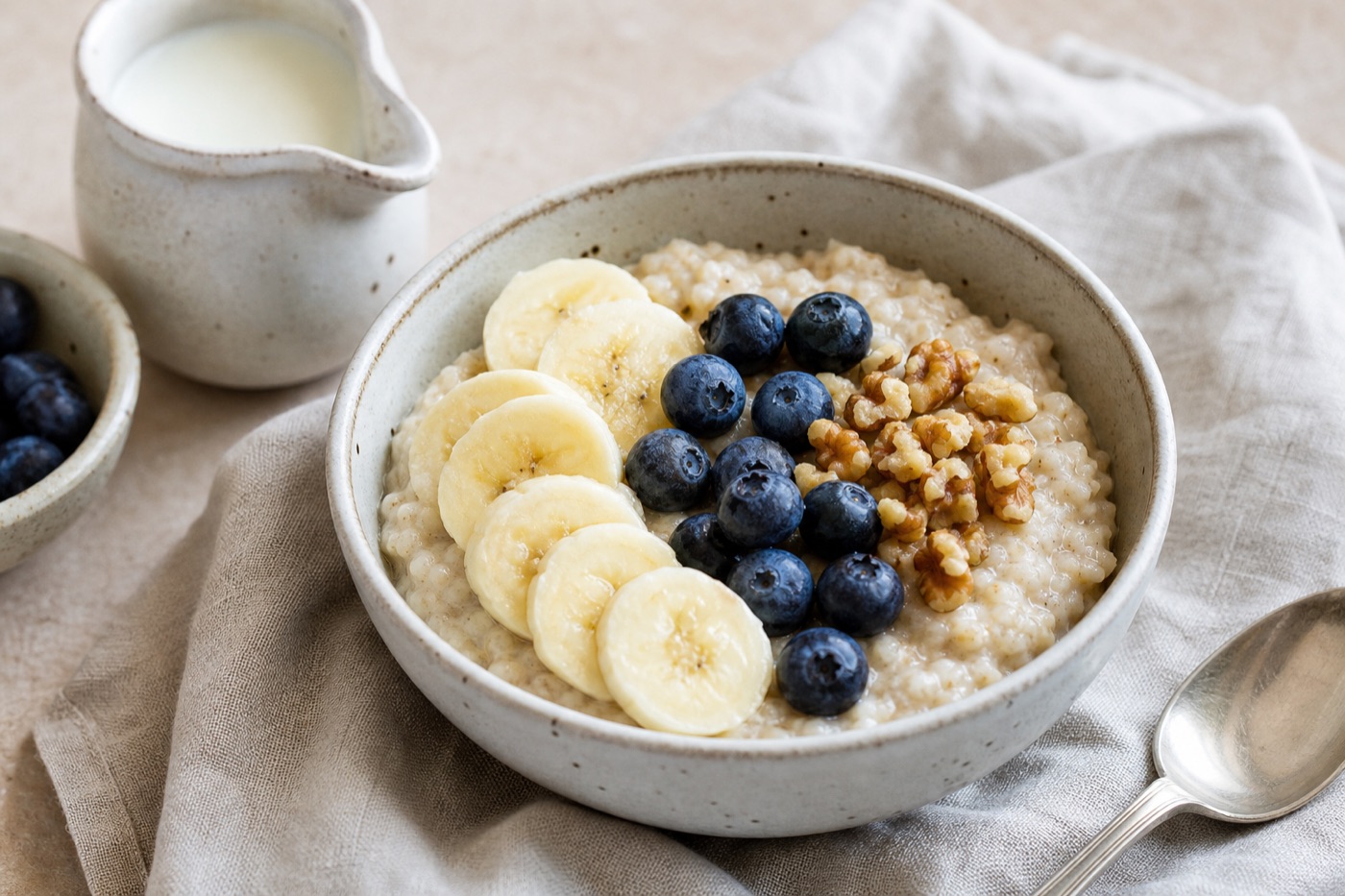
Oatmeal earns its healthy reputation more honestly than most breakfast foods. Oats are a whole grain with a particular kind of soluble fiber, beta-glucan, that helps lower LDL cholesterol, and the FDA permits a heart-health claim on foods that supply enough of it. The bowl only goes wrong when the oats come pre-sweetened or disappear under a mountain of toppings.
What’s in it
Half a cup of dry rolled oats, about 40 grams, has around 150 calories, 27 grams of carbohydrate, about 4 grams of fiber, about 5 grams of protein and roughly 3 grams of mostly unsaturated fat, based on typical USDA FoodData Central values. Cooked with water, that becomes about a cup of porridge. Oats also bring manganese, phosphorus, magnesium, iron, zinc and thiamin.
Cooking with milk changes the numbers: a cup of 2% milk adds about 120 calories and 8 grams of protein, which turns a light bowl into a more substantial breakfast.
The good
Cholesterol-friendly fiber. Beta-glucan forms a thick gel in the gut that binds bile acids and helps lower LDL cholesterol. The FDA allows a claim that 3 grams a day of beta-glucan soluble fiber from whole oats, as part of a diet low in saturated fat and cholesterol, may reduce the risk of heart disease. A bowl of oatmeal supplies a good share of that.
A whole grain, every time. All oatmeal is whole grain, even quick and instant oats. The Dietary Guidelines for Americans recommend making at least half your grains whole, and oats are one of the easiest ways to do it.
Filling for the calories. Fiber plus the water oats absorb as they cook make porridge bulky and satisfying, which helps keep mid-morning hunger at bay.
Cheap and adaptable. A canister of plain oats costs little per serving and works hot, overnight, baked, or blended into smoothies.
The catch
Flavored instant packets. Maple, brown sugar and fruit-flavored packets often contain 8 to 12 grams of sugar, much of it added, in a small serving. Check the Added sugars line.
Toppings add up fast. Brown sugar, syrup, dried fruit, nut butter and granola can each add 50 to 100 calories or more per spoonful. Our verdict on granola explains why a “healthy” topping can double a bowl.
Faster digestion in the thinnest oats. The more processed the oat, the faster it tends to raise blood sugar. For most people this matters little, but people managing diabetes may prefer steel-cut or rolled oats paired with protein.
Low in protein on its own. Five grams is modest. A breakfast of oats alone may not hold everyone until lunch.
Steel-cut, rolled or instant?
| Type | How it’s made | Cooking time | Texture |
|---|---|---|---|
| Steel-cut | Whole oat groats chopped into pieces | about 20 to 30 minutes | Chewy, nutty |
| Rolled (old-fashioned) | Groats steamed and flattened | about 5 minutes | Soft, holds shape |
| Quick | Rolled thinner and cut smaller | 1 to 2 minutes | Softer |
| Instant | Precooked, rolled very thin | Just add hot water | Smooth, can turn pasty |
Nutrition per dry weight is close across all four. Pick on taste, time and how slowly you want the bowl to digest.
How to eat it well
- Start plain. Sweeten with mashed banana, berries, grated apple or a small drizzle of honey.
- Add protein. Cook the oats in milk or soy milk, stir in a scoop of Greek yogurt after cooking, or top with an egg if you like savory oats.
- Add healthy fat in small amounts. A tablespoon of walnuts, almonds, chia or ground flaxseed brings crunch and staying power.
- Try savory. Oats cooked in broth with sautéed mushrooms, spinach and a little cheese make a quick lunch.
- Batch it. Overnight oats in jars or a pan of baked oatmeal covers breakfasts for several days.
Who should go easy
People with celiac disease should only use oats labeled gluten-free and confirm with their doctor or dietitian. Anyone told to limit carbohydrates for diabetes should watch portions and pair oats with protein and fat. If you are increasing fiber quickly, add it gradually and drink plenty of fluids to avoid bloating.
The verdict
Plain oatmeal is one of the most reliably healthy breakfasts there is: whole grain, high in cholesterol-lowering fiber, filling and inexpensive. Buy plain oats in whatever cut suits your mornings, add your own fruit and a source of protein, and keep the sweet toppings modest.
Your questions, answered
- Are steel-cut oats healthier than rolled oats?
- Their nutrition per dry ounce is almost the same. Steel-cut oats are chopped rather than flattened, so they cook more slowly and digest a little more gradually. Rolled oats are a perfectly healthy, quicker choice.
- Is instant oatmeal bad for you?
- Plain instant oats are still whole-grain oats, just cut and steamed thinner so they cook fast. They raise blood sugar a bit more quickly than steel-cut. The real issue is the flavored packets, which often add sugar and sometimes salt.
- Is oatmeal good for weight loss?
- It can help. A bowl of oatmeal made with water or milk is filling for its calories, thanks to fiber and volume. Portions and toppings decide whether it stays a light breakfast or turns into a heavy one.
- Are oats gluten-free?
- Oats do not contain gluten themselves, but they are often grown and processed alongside wheat, barley and rye. People with celiac disease should choose oats labeled gluten-free and check with their care team, since a small number also react to oats.
Sources
- USDA FoodData Central
- U.S. Food and Drug Administration (FDA)
- Dietary Guidelines for Americans
- Celiac Disease Foundation
General information, not medical advice. If a food decision depends on your health, talk to a doctor or registered dietitian.