Is Kombucha Healthy? The Fizzy Tea, Without the Hype
Kombucha is fermented sweet tea, and it's a lower-sugar swap for soda for many people. The gut-health claims run well ahead of the research, and a few groups are better off skipping it.
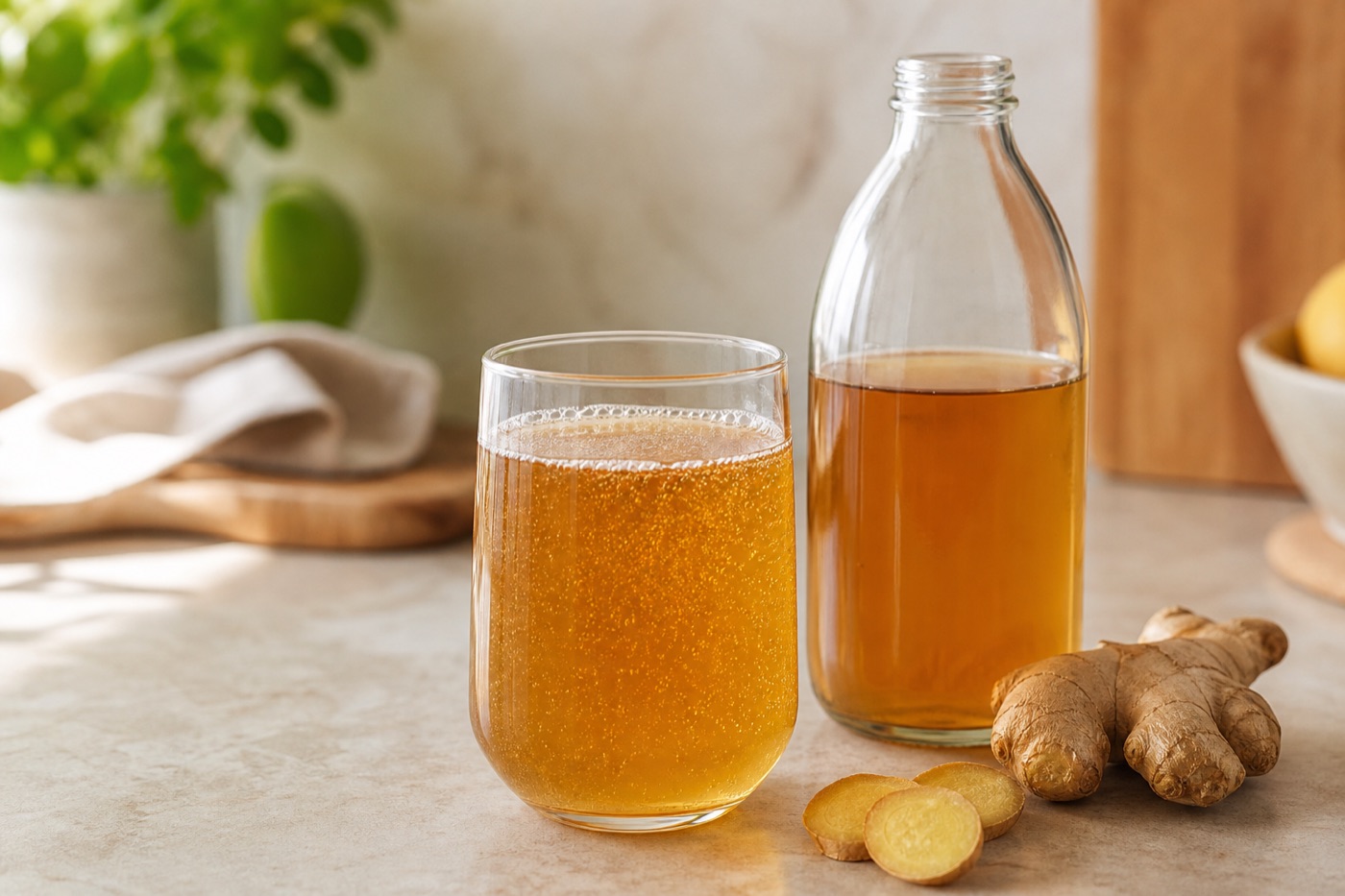
Kombucha has moved from health-food stores to gas-station coolers in a few years, carried by claims about gut health, detox and immunity. What’s actually in the bottle is simpler: sweetened tea fermented by a culture of yeast and bacteria. As a drink, it can be a decent swap for soda. As a health treatment, the evidence isn’t there yet.
What it is
Kombucha is made by adding a culture of bacteria and yeast, often called a SCOBY, to sweetened black or green tea and letting it ferment for a week or more. The yeast eat some of the sugar and make alcohol and carbon dioxide, and the bacteria turn much of the alcohol into acids. That gives kombucha its fizz and its sour, vinegary tang. Many commercial versions are then flavored with fruit juice, ginger or herbs.
The good
Less sugar than many sodas. Fermentation uses up part of the sugar, and many kombuchas carry less sugar per serving than regular soda. For someone trying to cut back on sugary drinks, that can be a real improvement.
Tea compounds. Kombucha keeps some of the polyphenols from the tea it’s brewed from, and a small amount of caffeine.
Possibly live microbes. Unpasteurized kombucha contains live yeast and bacteria, and some pasteurized brands add probiotic strains back afterward. That’s part of why it’s grouped with fermented foods.
The catch
The research is thin. Most of the studies behind kombucha’s health claims were done in lab dishes or animals. There’s very little good research in people showing it improves digestion, immunity or anything else. The live microbes in a given bottle also vary, and there’s no guarantee they survive or do anything useful in your gut.
Sugar varies a lot. Some brands are lightly sweet, others closer to juice. A large bottle often counts as two servings, so the sugar on the label may be per half bottle. Read the nutrition facts rather than assuming it’s low.
A little alcohol. Fermentation makes alcohol. Under federal rules from the Alcohol and Tobacco Tax and Trade Bureau, kombucha that reaches 0.5% alcohol by volume or more at any point, including after bottling, is regulated as an alcohol beverage. Most store-bought kombucha sold as a soft drink stays under that line, but it isn’t zero, and home brews can be stronger.
Acidity. Kombucha is acidic, which can wear on tooth enamel if you sip it all day.
Store-bought or home-brewed?
Commercial kombucha is made under food-safety rules and its alcohol is monitored. Home brewing is a different matter. Contamination by mold or harmful bacteria is possible, and acidity and alcohol are hard to control without testing. In 1995 the CDC reported serious illness in two women in Iowa who had drunk home-brewed kombucha. If you brew your own, use clean equipment, follow a tested method, and throw out any batch that looks or smells wrong.
How to drink it well
- Read the label. Compare sugar per serving between brands, and check how many servings are in the bottle.
- Stick to one serving. About 8 ounces is plenty.
- Use it to replace soda, not as an extra drink on top of your usual ones.
- Drink it with a meal, and rinse with water afterward, to go easier on your teeth.
- For gut health, look elsewhere first. Yogurt with live cultures, kefir, sauerkraut and kimchi have more research behind them, alongside a diet high in fiber from beans, vegetables and whole grains.
Who should go easy
- People who are pregnant or breastfeeding, because of the alcohol and because unpasteurized drinks can carry a small risk of harmful bacteria.
- People with weakened immune systems, including those on chemotherapy or other immune-suppressing treatment, for the same reason.
- Children, given the alcohol and caffeine.
- Anyone avoiding alcohol completely, including people in recovery.
- People sensitive to caffeine or prone to acid reflux.
If you have a health condition and want to try kombucha, ask your doctor first.
The verdict
Kombucha is a perfectly reasonable drink if you enjoy it, and a smart swap if it’s replacing soda. It isn’t a cure for anything. Buy it from a store, check the sugar, keep it to a serving, and get your gut-health benefits from fiber and better-studied fermented foods.
Your questions, answered
- Is kombucha good for your gut?
- It might contain live microbes, but there's little good human research showing that drinking kombucha improves gut health. Most studies so far have been in the lab or in animals. If you want fermented foods, yogurt with live cultures, kefir, sauerkraut and kimchi have a longer track record.
- Does kombucha have alcohol?
- Yes, a small amount, because fermentation produces alcohol. Under federal rules, kombucha that reaches 0.5% alcohol by volume or more at any point is regulated as an alcohol beverage. Home-brewed kombucha can end up stronger.
- Is kombucha better than soda?
- Often, yes, because many kombuchas have less sugar per serving than regular soda. But some flavored versions are fairly sweet, so compare labels. Sparkling water with a splash of juice is lower still.
- How much kombucha should I drink a day?
- There's no official limit. Treat it like any other sweetened drink: one serving, about 8 ounces, is plenty for most people. Drinking a lot of it adds sugar and acidity, which can be hard on teeth.
- Is it safe to make kombucha at home?
- It can be risky. Home brewing can be contaminated by harmful bacteria or mold, and alcohol and acidity can be hard to control. A 1995 CDC report described serious illness in two Iowa women who had drunk home-brewed kombucha. If you brew, follow strict hygiene and discard anything that looks or smells off.
Sources
- Alcohol and Tobacco Tax and Trade Bureau (TTB): Kombucha
- Centers for Disease Control and Prevention (CDC): MMWR, 1995
- Dietary Guidelines for Americans
- USDA FoodData Central
General information, not medical advice. If a food decision depends on your health, talk to a doctor or registered dietitian.