Is Coffee Healthy? What Your Daily Cup Does and Doesn't Do
Black coffee has almost no calories, and moderate drinking fits within U.S. dietary advice. The questions worth asking are how much caffeine you get, how it affects your sleep, and what goes into the cup besides coffee.
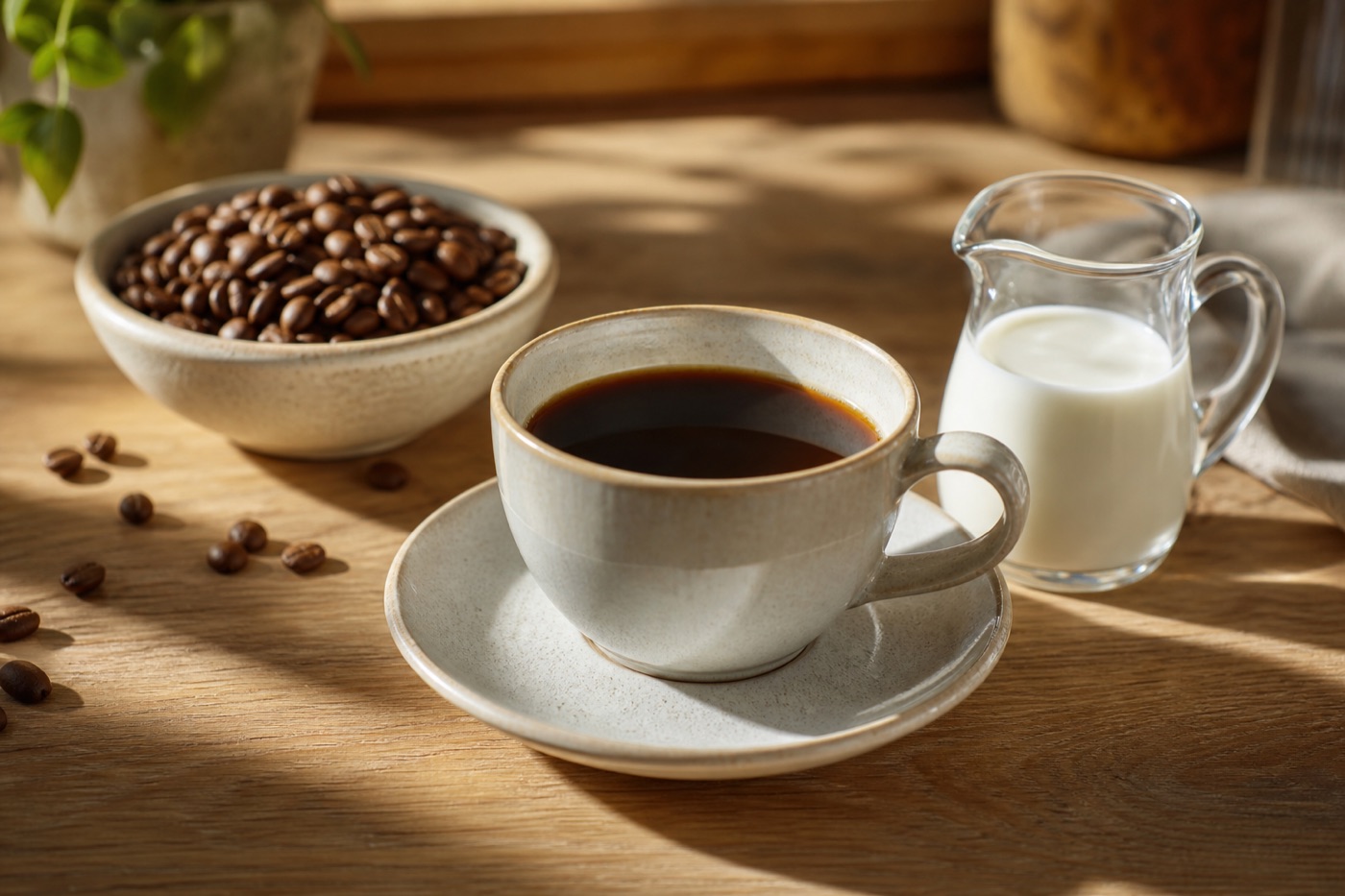
Coffee has gone from suspected villain to something closer to a health food in the space of a generation, and the truth sits in between. Black coffee has almost no calories, it’s a major source of plant compounds called polyphenols, and moderate drinking fits within U.S. dietary advice. The catches are caffeine, which affects people very differently, and everything that gets added to the cup.
The good
Almost no calories. An 8-ounce cup of black brewed coffee has about 2 calories, based on USDA FoodData Central values. It also supplies small amounts of potassium and magnesium.
Polyphenols. Coffee is one of the biggest sources of polyphenols in many people’s diets, especially chlorogenic acids, which act as antioxidants.
A healthy pattern, in moderation. Large observational studies have repeatedly linked moderate coffee drinking with lower rates of type 2 diabetes, Parkinson’s disease and some liver conditions. These studies show associations, not proof that coffee causes the benefits, and coffee drinkers may differ in other ways. But the evidence has been reassuring enough that the Dietary Guidelines for Americans treat moderate coffee as compatible with a healthy diet for most adults.
The catch
Caffeine varies, and so do people. The FDA gives a range of about 113 to 247 milligrams of caffeine for a 12-ounce cup of regular brewed coffee, and cafe sizes can go well beyond that. For most healthy adults, the FDA cites 400 milligrams a day, roughly two to three 12-ounce cups, as an amount not generally associated with negative effects. Some people feel jittery, anxious or get a racing heart at far less.
Sleep. Caffeine stays in your system for hours. A coffee in the mid-afternoon can still be affecting you at bedtime, even if you fall asleep fine. If your sleep is poor, try moving your last cup to before lunch for a couple of weeks and see if it helps.
What goes in the cup. A tablespoon of sugar adds about 48 calories, and flavored syrups, whipped cream and large milk-based drinks can turn coffee into one of the biggest sources of added sugar in your day. A large flavored latte can carry several hundred calories.
Unfiltered coffee and cholesterol. Coffee contains oils, including cafestol and kahweol, that can raise LDL cholesterol. Paper filters trap most of them. French press, Turkish, boiled and some espresso-style coffees let more through. If your LDL is high, filtered coffee is the better everyday choice.
Brewed, espresso or instant?
All three are fine. A single shot of espresso has less caffeine than a large mug of brewed coffee, though it’s more concentrated. Instant coffee usually has a bit less caffeine than brewed. Cold brew can be surprisingly strong, depending on how it’s made and diluted. If you’re watching caffeine, the cup size and number of shots matter more than the brewing method.
How to drink it well
- Start with black or with a splash of milk, and add sweetener sparingly if you need it.
- Order the smaller size at cafes. Many large cups hold two or more standard servings.
- Set a caffeine cutoff in the early afternoon to protect your sleep.
- Switch to decaf after your first cup or two if you enjoy the ritual more than the buzz.
- Use a paper filter if your cholesterol is high.
Who should go easy
- People who are pregnant or trying to become pregnant. The American College of Obstetricians and Gynecologists recommends less than 200 mg of caffeine a day during pregnancy.
- People with anxiety, heart rhythm problems, acid reflux or insomnia, who often find caffeine makes symptoms worse.
- Anyone on certain medicines. Some interact with caffeine. Your pharmacist or doctor can tell you.
- Children and teens, for whom medical groups advise limiting caffeine.
The verdict
For most healthy adults, a few cups of coffee a day is a healthy habit. Drink it close to black, keep the cups to a moderate number, finish early enough to sleep well, and treat sweetened cafe drinks as the occasional dessert they are.
Your questions, answered
- How many cups of coffee a day is safe?
- For most healthy adults, the FDA cites 400 mg of caffeine a day, about two to three 12-ounce cups of regular brewed coffee, as an amount not generally associated with negative effects. Caffeine content varies a lot between brews and cafes, and some people feel effects at much lower doses.
- Is black coffee good for weight loss?
- Black coffee has almost no calories, so it fits easily into a weight-loss plan. It won't burn meaningful fat on its own. What matters more is what you add: a large flavored latte with syrup and whipped cream can carry several hundred calories.
- Is decaf coffee healthy?
- Yes, it's a good option if you're sensitive to caffeine or drink coffee later in the day. Decaf still contains a small amount of caffeine, so it isn't completely caffeine-free.
- Can I drink coffee while pregnant?
- Many health organizations advise limiting caffeine during pregnancy. The American College of Obstetricians and Gynecologists recommends less than 200 mg a day, roughly one 12-ounce cup of coffee. Check with your own care team.
- Does coffee dehydrate you?
- Not in the amounts most people drink. Caffeine has a mild diuretic effect, but the water in a cup of coffee more than makes up for it, so regular coffee counts toward your daily fluids.
Sources
- U.S. Food and Drug Administration (FDA): Spilling the Beans, How Much Caffeine Is Too Much?
- American College of Obstetricians and Gynecologists (ACOG)
- Dietary Guidelines for Americans
- USDA FoodData Central
General information, not medical advice. If a food decision depends on your health, talk to a doctor or registered dietitian.